
Sealing of fissures – it is a simple and completely painless procedure that allows you to protect the baby’s milk and root teeth from the development of caries. It consists in applying a special paste to the molars and premolars, which fills the natural furrows and prevents plaque from accumulating in them.
Indentations on the surface of chewing teeth are called fissures. They have a tortuous shape and are difficult to clean. As a result, food residues accumulate there and bacteria develop, which eventually leads to caries.
In addition, the enamel of milk teeth and new roots has a low degree of mineralization, which makes them vulnerable to infection. Unfortunately, by the age of 10, many children already develop fissural caries.
You can reduce the risk with the help of sealing. It requires only 1 visit to the doctor, but protects the teeth from decay and nourishes them with fluoride for 1-3 years.
Children’s dentists recommend taking a child for an examination every six months, starting from 2-3 years of age. This helps to teach the baby to brush his teeth correctly, as well as to carry out all preventive procedures and, if necessary, treatment in a timely manner.
Sealing of fissures is prescribed at different ages. There are indications for the procedure:
Milk molars and premolars are replaced by permanent ones at the age of 6-7 years. It is at this time that fissures are usually sealed.
To prevent the early development of caries, the child should be seen by a dentist. He will assess the shape, depth of the fissures and the condition of the enamel, after which he will determine whether sealing is necessary.
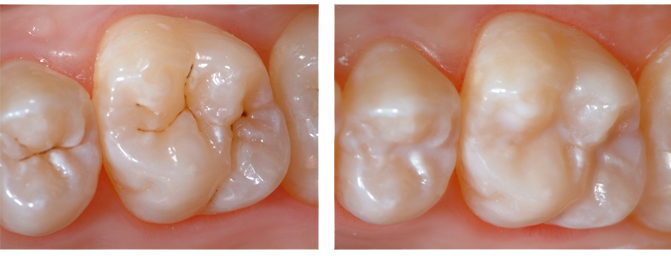
In the NOWA children’s dentistry department, fissures are sealed using two methods:
Non-invasive sealing is most often performed on children. Invasive is required for deep or “closed” fissures (conical and drop-shaped), which is more typical for root teeth that have erupted a long time ago. This procedure is often recommended for adults as well.
Covering fissures with sealing material is a simple procedure. It can be performed without preparation and the use of anesthesia, which allows you to close all the child’s chewing teeth in 1 session.
The procedure is carried out as follows:
On average, sealing fissures of 1 tooth takes up to 20 minutes.
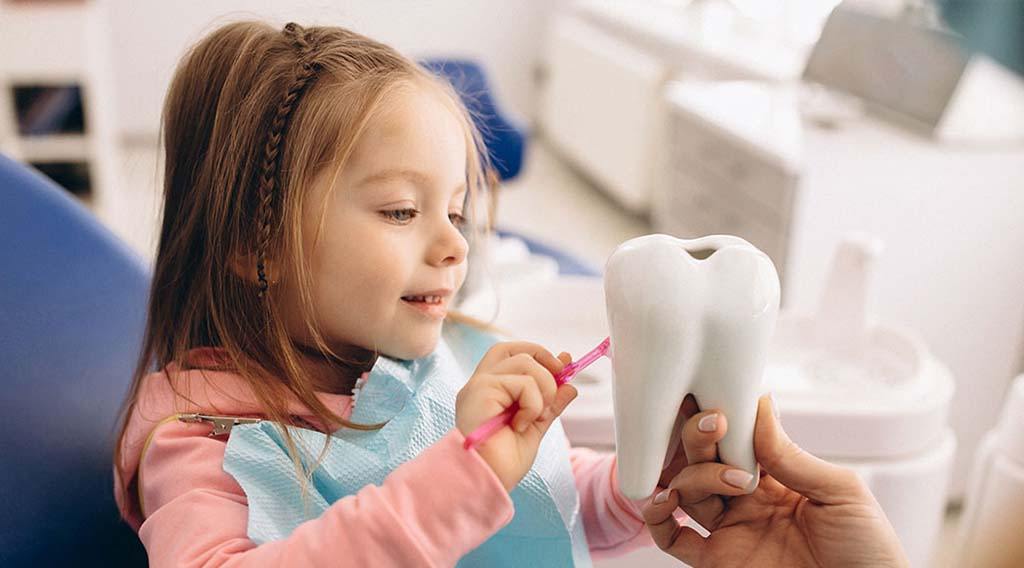
For children, fissures are usually sealed using a non-invasive method. This procedure is painless and does not cause discomfort. Its main advantages are:
Due to physiological features, chewing teeth in children are exposed to caries in the first place. Sealing of fissures reduces the risk of infection by 50-90%, according to various sources.
As for the disadvantages of sealing, among them it is possible to note only the risk of developing caries under the sealant, if the procedure is performed incorrectly and there is a free space between the material and the surface of the tooth.
In “NOWA”, fissures are sealed by experienced specialists children’s dentists. Thanks to this, as well as the use of high-quality materials and high-precision diagnostic equipment, each patient is guaranteed the highest quality of medical care.
Despite the fact that fissure sealing has many advantages, in some cases it is not recommended. Relative contraindications to the procedure are considered:
Polityka prywatności i plików cookies • Prawa Pacjenta – NOWA Sp. z o.o. • Informacja o zbieraniu danych osobowych • Standardy Ochrony Małoletnich